

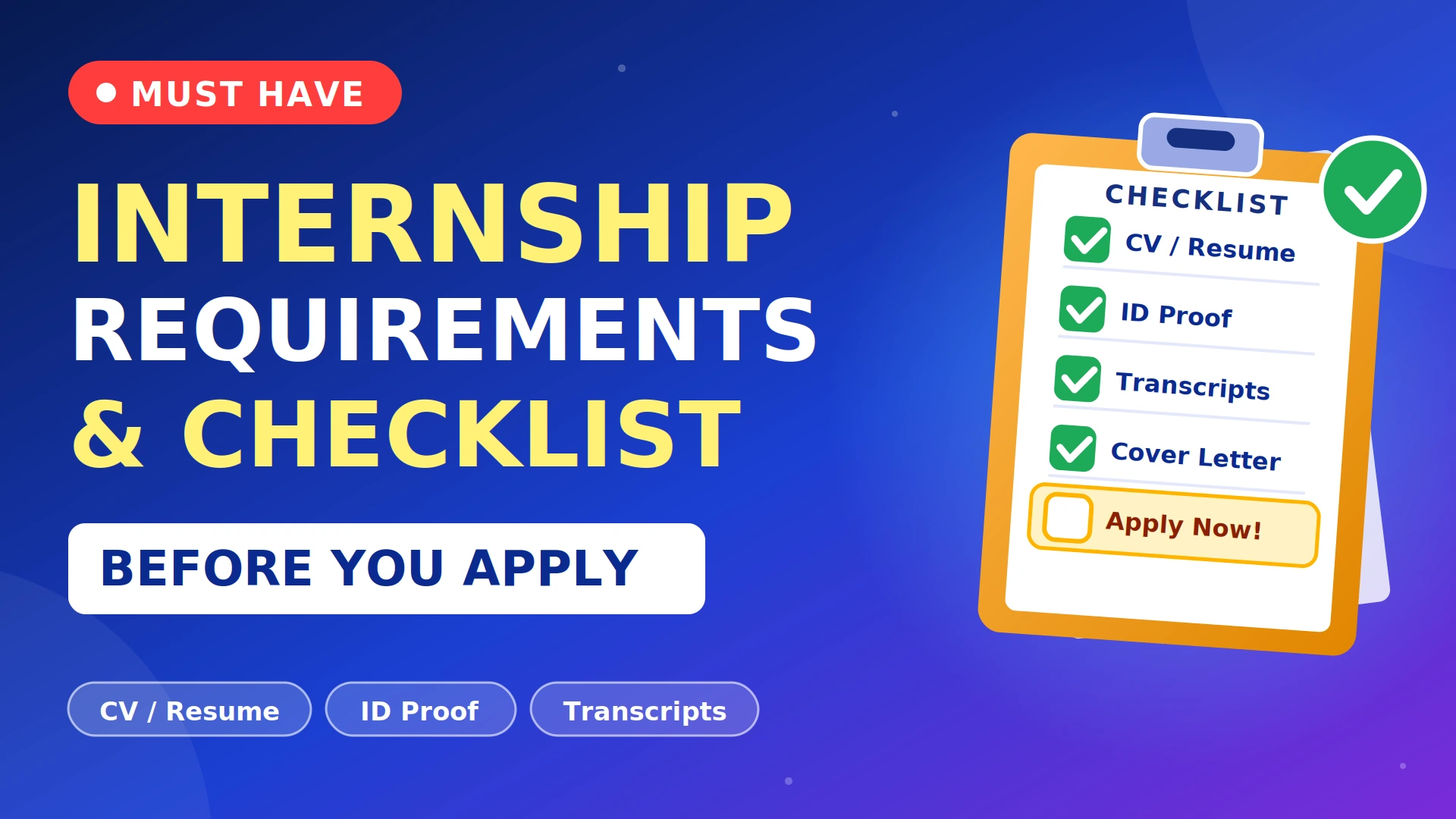
Most internship applications are rejected for simple reasons: a missing document, an outdated CV or a poorly written cover letter This checklist covers what most employers and programmes ask for in 2026, so you can get everything ready before a deadline arrives.
Core Documents (Needed Almost Everywhere)
- CV / Resume: one or two pages, tailored to the role, with education, skills, projects and any experience.
- Cover letter or motivation letter: one page explaining why you want this internship and what you can offer.
- Academic transcripts: a recent transcript or marksheet, and an enrolment or graduation letter if you are still studying.
- Passport or national ID: a valid copy. For international programmes, check that the passport has at least 6 months of validity left.
- Passport-size photo: a recent, clear photo, if the form asks for one.
Often Required
- Recommendation letters: usually one or two from a professor or previous supervisor.
- Language proof: IELTS, TOEFL or a similar certificate when the programme requires it.
- Portfolio or work samples: common for design, writing, development and media roles.
- Proof of enrolment or university permission letter: some programmes accept only currently enrolled students or graduates of a recent year.
For International or On-Site Internships
- Visa documents, or a letter from the host organisation that supports your visa application.
- Proof of funds or accommodation, if the embassy asks for it.
- Police clearance or a medical certificate, for some countries and roles.
- Travel or health insurance, where the host requires it.
Preparation Tips
- Scan every document as a clear PDF and keep the file size small.
- Name files clearly, for example Ali-Khan-CV.pdf.
- Keep the details on your CV, transcript and passport consistent, especially your name spelling.
- Read the official advert carefully, because each programme lists its own required documents.
- Never pay an application fee to a recruiter or agent. Genuine internships do not charge you to apply.
